
Feeling a tight chest on June 9? You can ease that stress in just a few minutes. Below is a clear how‑to that walks you through the MindShift therapy tip for the day.
Step 1: Set a Clear Intent for June 9
First, decide what you want to change. Maybe you want less rumination, or you want to feel calmer before a meeting. Write that goal on a sticky note or in your phone notes. Seeing the intent makes your mind focus on one direction instead of wandering.
When you name the intention, you give your brain a target. Research shows that setting a specific aim helps the brain allocate attention resources more efficiently. For example, Cognitive Behavioral Therapy often begins with a clear statement of the problem you want to address.
Pick a phrase that feels positive and present, like “I will stay relaxed during my afternoon call.” Keep it short. By the end of this step you should have a written intent you can glance at throughout the day.
Step 2: Create a Calm Space
Find a spot where you won’t be interrupted. It could be a corner of your living room, a quiet balcony, or a dedicated chair by a window. Clear the surface of clutter , a tidy area signals a tidy mind.
Soft lighting helps the nervous system shift toward relaxation. If you have a lamp, dim it or use a warm‑white bulb. Add a scented candle or a few drops of lavender oil if that feels soothing. The scent of lavender has been linked to lower heart rate and reduced anxiety levels.
Make sure the space feels safe. Close the door, turn off notifications, and let anyone you live with know you need a few minutes of privacy.

When you return to this spot later, your brain will recognize it as a cue for calm.
Step 3: Practice the June 9 MindShift Technique
Sit in your calm space, close your eyes, and take three slow breaths. Inhale for four counts, hold for two, exhale for six. This pattern slows the heart rate and signals safety to the nervous system.
Next, bring your intention to mind. Say it silently, then imagine a small, vivid picture of yourself succeeding. If your goal is to stay relaxed, picture yourself speaking calmly, feeling confident.
Finally, repeat a simple mantra that matches your intent, such as “I am calm.” Say it three times, each time letting the words settle into your chest.
By the end of this practice you should feel a subtle shift in tension. If you’re new to this, it may feel odd at first , that’s normal. Keep practicing daily for best results.
Step 4: Reflect on Your Experience
After the exercise, take a minute to notice any changes. Do you feel lighter in your shoulders? Is your mind quieter? Jot down a quick note in a journal or on your phone.
Reflection helps lock the benefit into memory. The CDC notes that regular reflection on coping strategies can reinforce stress‑reduction habits ( CDC anxiety coping).
If you notice that the technique worked well, note what helped , the breathing count, the mantra, the quiet space. If it felt stiff, adjust the pace or try a different mantra next time.
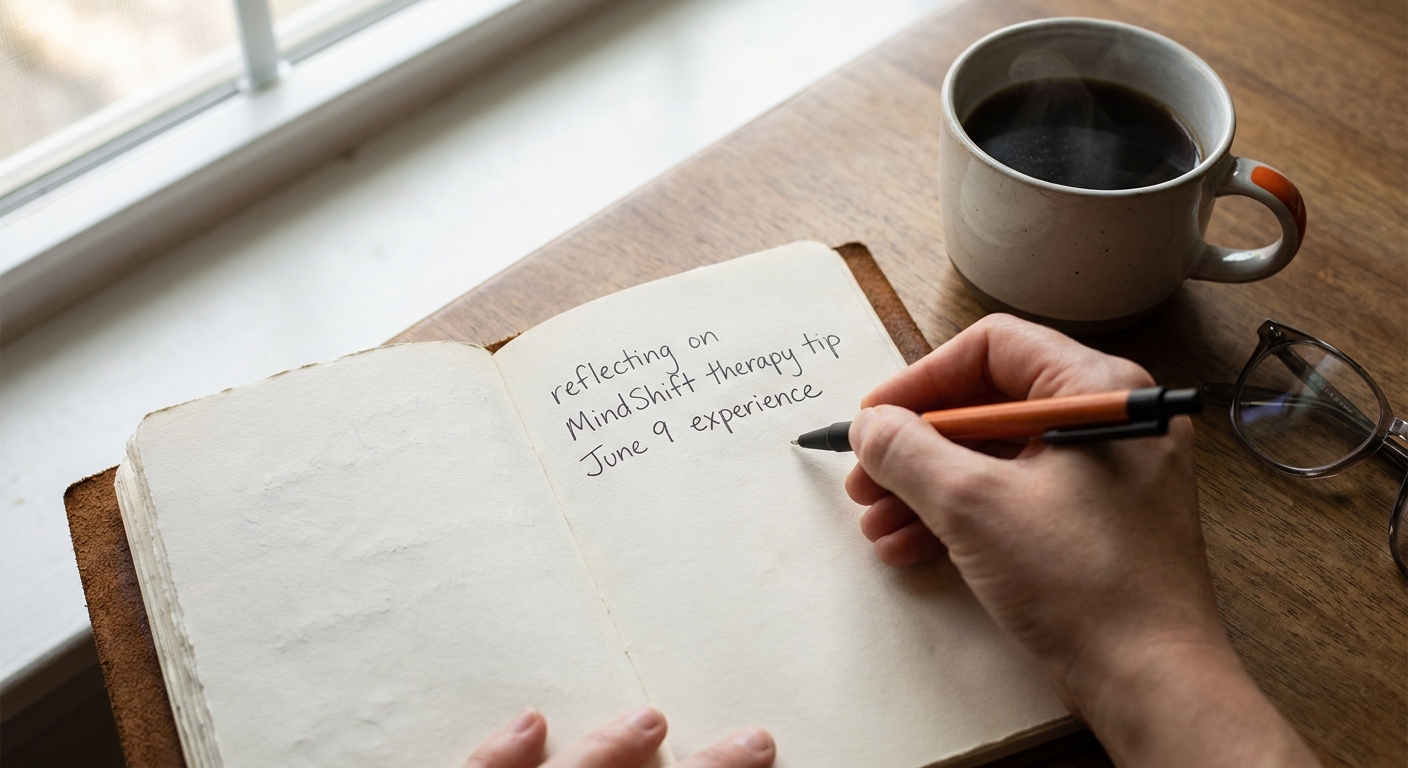
When you finish, you should have a clear record of what helped and what you might tweak.
Step 5: Build a Sustainable Routine
Consistency is what turns a one‑off tip into a real skill. Schedule a recurring reminder on your phone for the same time each day , perhaps right after you wake up or before lunch.
Pair the practice with an existing habit. If you always make coffee in the morning, place your journal next to the coffee maker and do the breathing exercise right after you pour your cup.
Check in with MindShift Psychological Services if you want extra guidance. Their licensed therapists can tailor the tip to fit your personal challenges and help you track progress over weeks.
For more ideas on setting daily intentions, see How to Use the MindShift Therapy Tip for June 3. And if you need a deeper look at building resilience, explore MindShift Therapy Tip June 5: A Usable Guide.
FAQ
What is the mindshift therapy tip for June 9?
The tip is a brief, intention‑based breathing exercise that you do in a calm space to lower anxiety on that specific day.
How long does the practice take?
It takes about five minutes from start to finish, including setting the intention, breathing, mantra, and reflection.
Do I need any special equipment?
No. All you need is a quiet spot, a comfortable seat, and a way to note your thoughts afterward , a phone or paper works fine.
Can I use this tip if I have severe anxiety?
Yes, but consider pairing it with guidance from a licensed therapist at MindShift Psychological Services, especially if anxiety feels overwhelming.
How often should I repeat the tip?
Daily practice builds the most benefit, but you can repeat it any time you feel stress building during the day.
Is this tip safe for teenagers?
It is safe for teens, and the simple steps can be taught by a parent or therapist to help them manage school‑related stress.
Putting these steps into your day gives you a quick, evidence‑based way to calm the mind without medication.
Conclusion
Start by setting a clear intention for June 9 and follow the five steps to create calm, practice the technique, reflect, and make it a habit. Take the first step now: write your intention and schedule a five‑minute slot in your calendar.